Case
Latenium™ X-Ray Detector Readout: FPGA-Based Evaluation System
We engineered a compact, FPGA-driven readout system for G-ray’s monolithic CMOS X-ray detector, bridging lab characterization and customer demos.
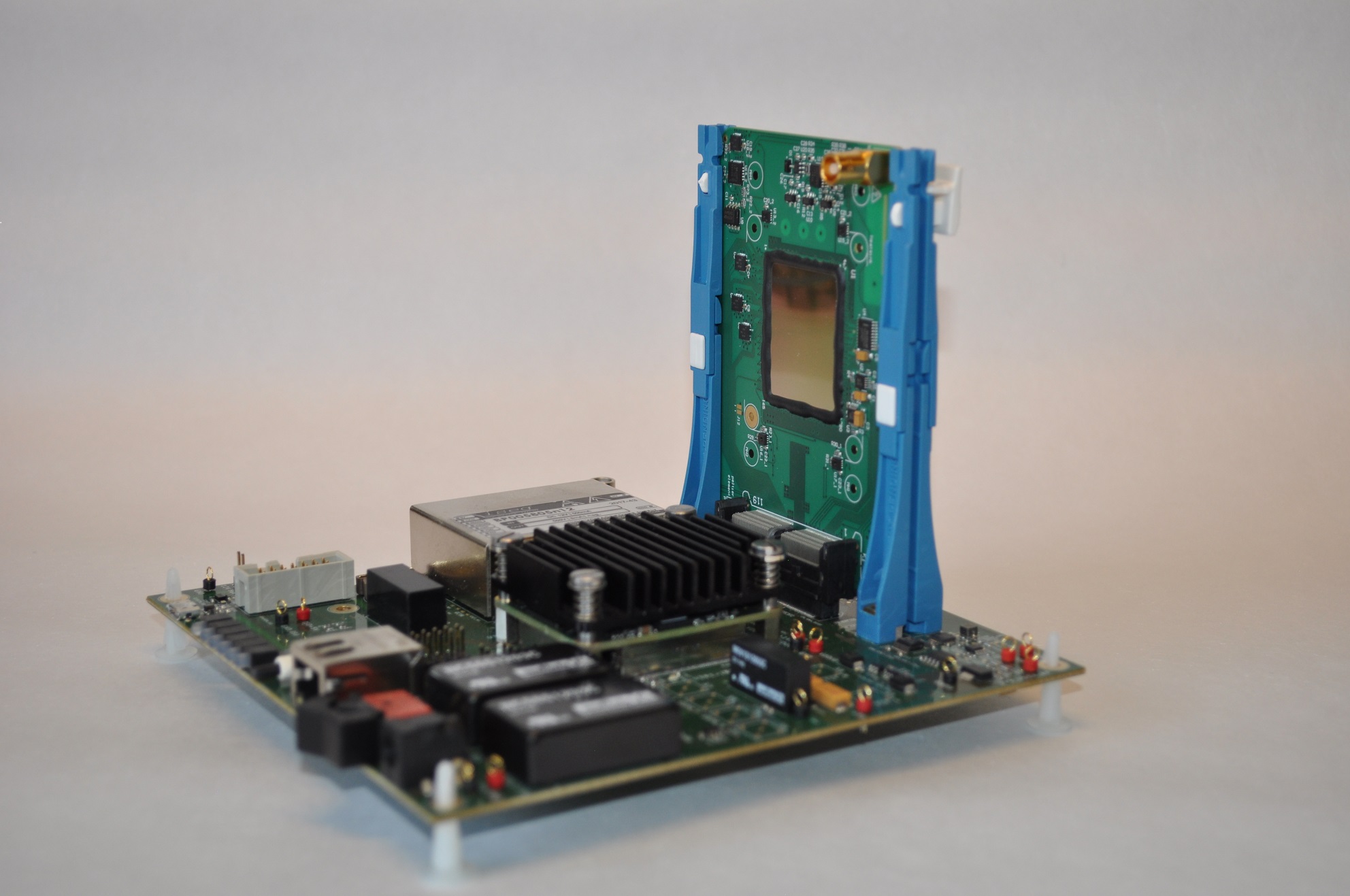
G-ray Medical developed a monolithic CMOS pixel array detector using digital direct conversion to minimize image blurring and enable energy discrimination. To validate this technology, they required a readout system that served two distinct, conflicting functions: a granular characterization tool for internal R&D and a robust technology demonstrator for customer evaluation. Bruco IC delivered the complete turnkey evaluation system, covering PCB design, FPGA logic, and software integration.
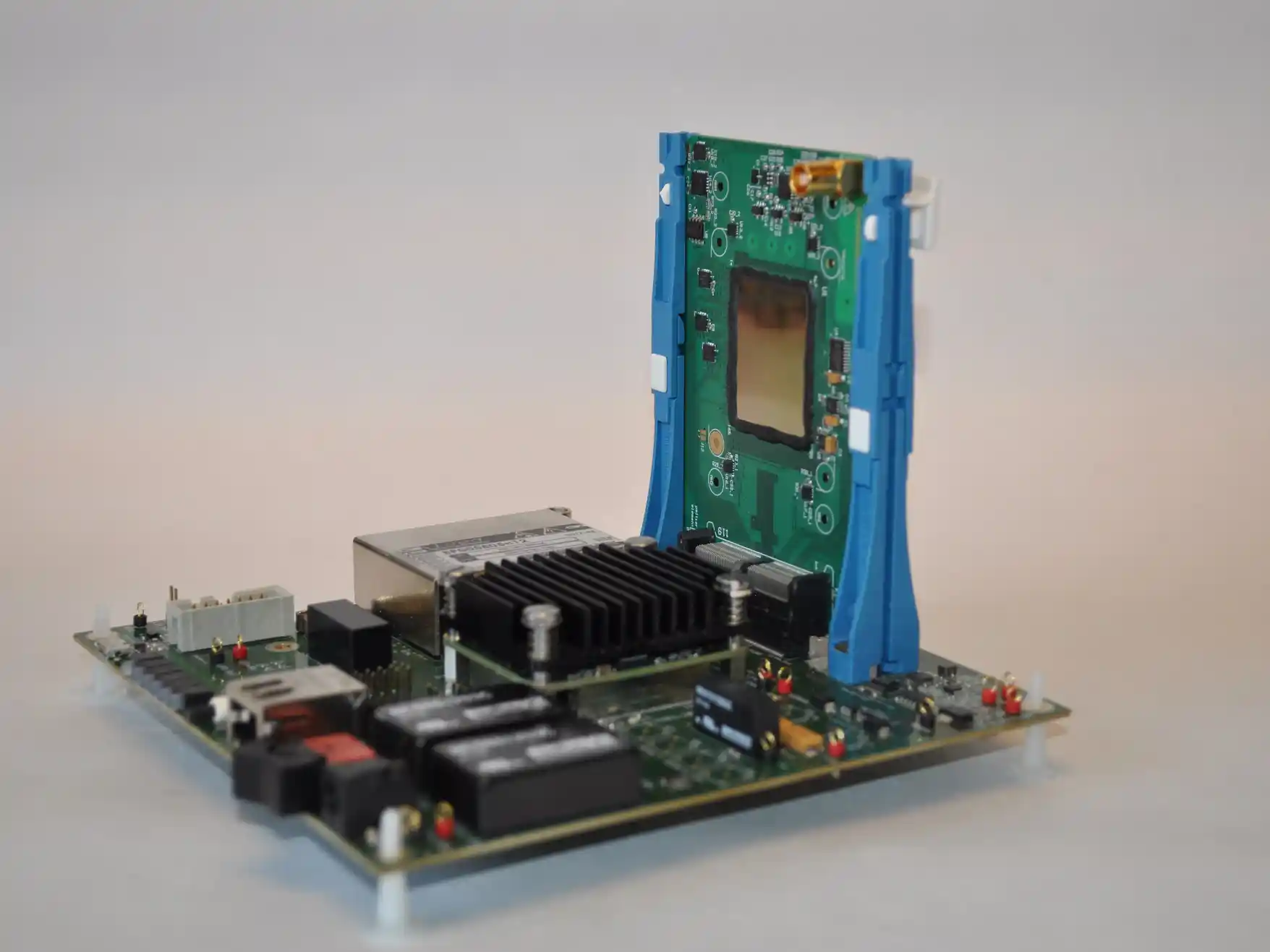
The primary design constraint was integrating comprehensive control capabilities into a compact footprint that could serve both the lab and the field. G-ray required a system that allowed deep access to sensor timing parameters for internal characterization, yet remained stable and user-friendly for external technology demonstrations.
Support for G-ray's "Digital Direct Conversion" mode was critical. This detection method requires high-speed readout logic to handle energy discrimination data without introducing latency, demanding a robust digital architecture capable of precise synchronization with the CMOS sensor.
To meet the bandwidth and timing requirements, we designed a stand-alone evaluation unit centered around a hybrid processing architecture:
Bruco IC managed the complete realization of the Latenium™ evaluation system, from the initial PCB layout and schematic capture to VHDL code development and final system verification.
The resulting platform enables G-ray to demonstrate their core value propositions—high-speed readout, minimized blurring, and low-dose procedures—on a single, portable device. The system is currently used for both the electrical characterization of new silicon and as a demonstration unit for G-ray’s commercial partners.
Explore the latest developments in RF IC, analog/mixed-signal design from Bruco Integrated Circuits.


.png)